
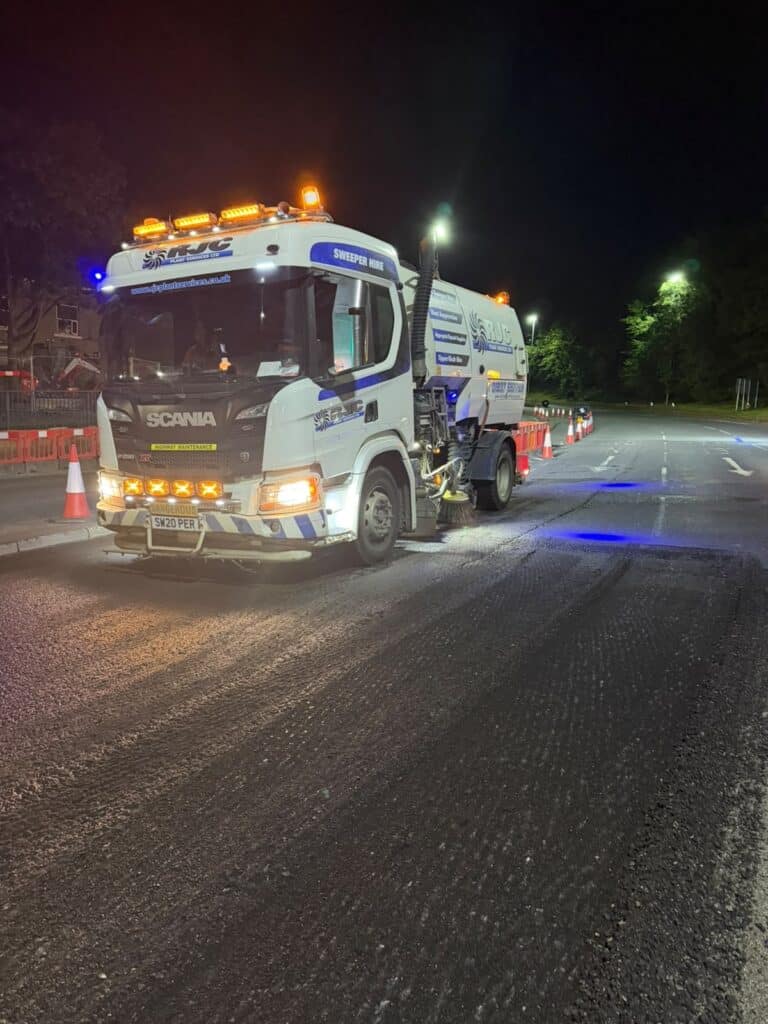
Whether it’s a busy motorway, a residential street or a commercial car park, road surfaces experience constant wear and tear. Over time, heavy traffic, changing weather conditions and general use can issues including: cracks, potholes and uneven surfaces to develop.
Keeping roads in good condition is essential for the safety of drivers, cyclists and pedestrians. Road planing plays an important role in making this possible.
But what exactly is road planing, and why is it such an important part of road maintenance?
What is road planing?
Road planing, sometimes referred to as cold milling, is the process of removing the top layer of an existing road surface. This is done using specialist machinery.
Rather than removing and replacing the entire road structure, road planing allows contractors to take away damaged or worn asphalt. This can be done to a specified depth, creating a suitable surface for new material to be laid.
The process is commonly used as part of road resurfacing projects, helping to restore roads without the need for more extensive reconstruction.
When is road planing needed?
Road planing is used across a wide range of highway maintenance and construction projects. This is particularly useful when existing surfaces have deteriorated or need to be adjusted.
Some of the most common reasons include:
- Damaged road surfaces: Removing cracked, worn or uneven asphalt before resurfacing.
- Pothole repairs: Preparing affected areas for new asphalt to create a more durable repair.
- Surface level adjustments: Removing existing material to maintain appropriate road levels, kerb heights and drainage.
- Road resurfacing projects: Preparing the existing road for a fresh layer of asphalt.
- Commercial and industrial areas: Maintaining car parks, access roads and other heavily used surfaces.
By removing only the necessary layers, road planing can provide a more efficient alternative to completely reconstructing a road.
How does road planing work?
Road planing is carried out using specialist machinery fitted with a rotating cutting drum. This removes the existing asphalt to the required depth.
As the machine moves along the road, the removed material is typically transferred onto a conveyor system and loaded directly into waiting vehicles for transportation away from the site.
Once the planing process is complete, the surface is cleaned and prepared for the next stage of resurfacing.
Efficient coordination between the machinery, transport vehicles and site teams is important to keep the project moving. This minimises disruption, particularly when working on busy roads or within restricted timeframes.
What happens to the removed asphalt?
One of the advantages of road planing is that much of the material removed can be recycled.
The asphalt collected during the process, often referred to as road planings or reclaimed asphalt pavement (RAP), can be processed and reused in suitable construction applications, including the production of new asphalt mixtures.
Reusing these materials can help reduce the demand for virgin aggregates, minimise waste and support a more sustainable approach to highway maintenance.
Why is road planing important?
Road planing offers several benefits for contractors, local authorities and road users.
Improved road safety
Removing damaged and uneven surfaces helps prepare roads for effective resurfacing, reducing the risk of hazards caused by deteriorating asphalt.
More efficient maintenance
By targeting specific layers of the road surface, contractors can carry out maintenance without necessarily replacing the entire road structure, helping to reduce unnecessary work and material use.
Reduced disruption
When planned and coordinated effectively, road planing can help streamline resurfacing projects and minimise the time roads need to be closed or restricted.
Supporting sustainability
The ability to recover and reuse asphalt materials helps reduce construction waste and supports more resource-efficient road maintenance.
Supporting road maintenance projects
Road planing is just one part of a wider road maintenance operation. From preparing the surface to removing materials and keeping the surrounding roads clean, several services often need to work together to ensure projects run efficiently.
At RJC Plant Services, we understand the importance of reliable equipment and efficient site operations. Our range of specialist vehicles and services, including road sweeping and material transportation, can help support contractors working on highway maintenance and resurfacing projects.
To find out more about how RJC Plant Services can support your next project, get in touch with our team today.